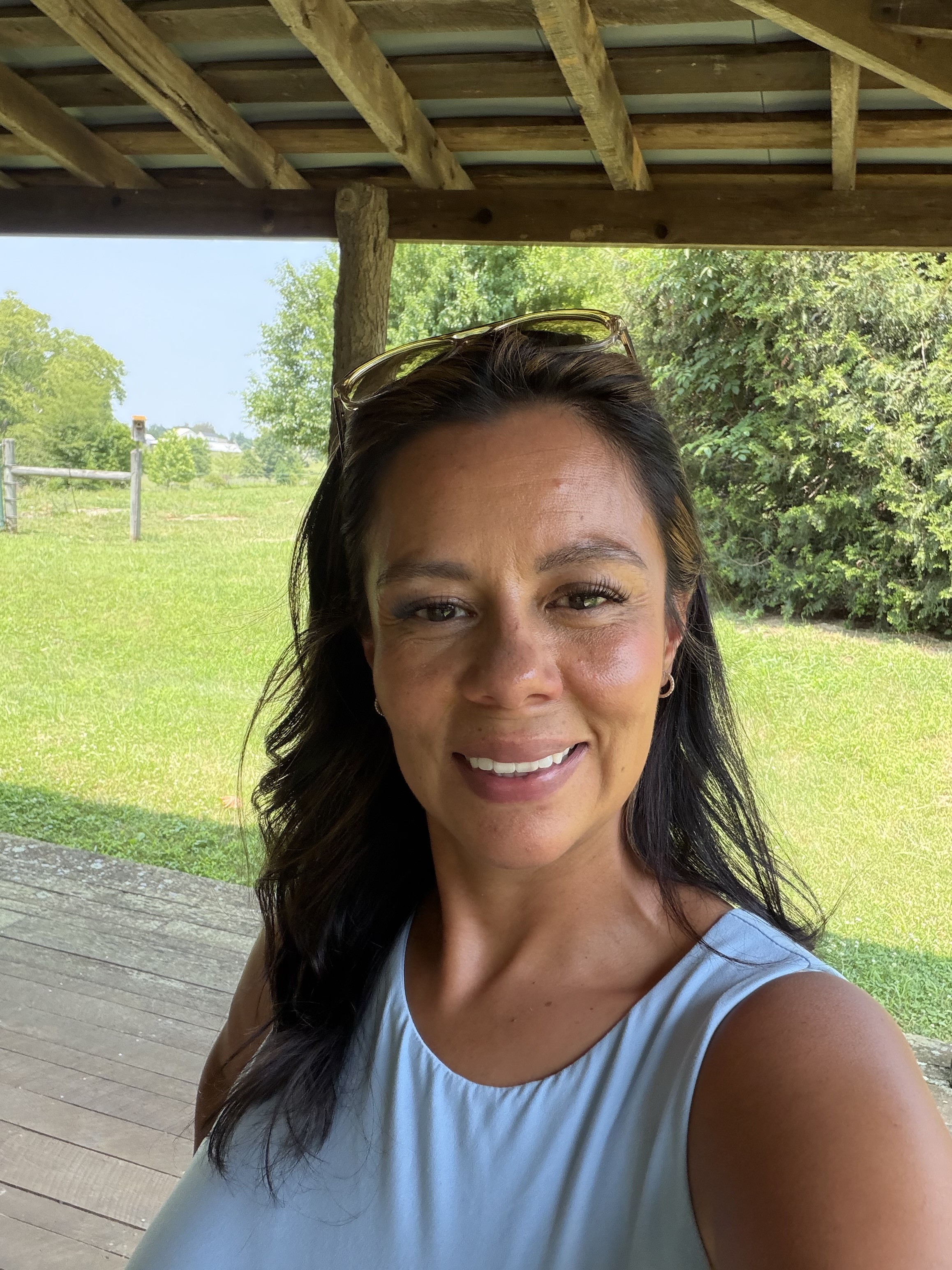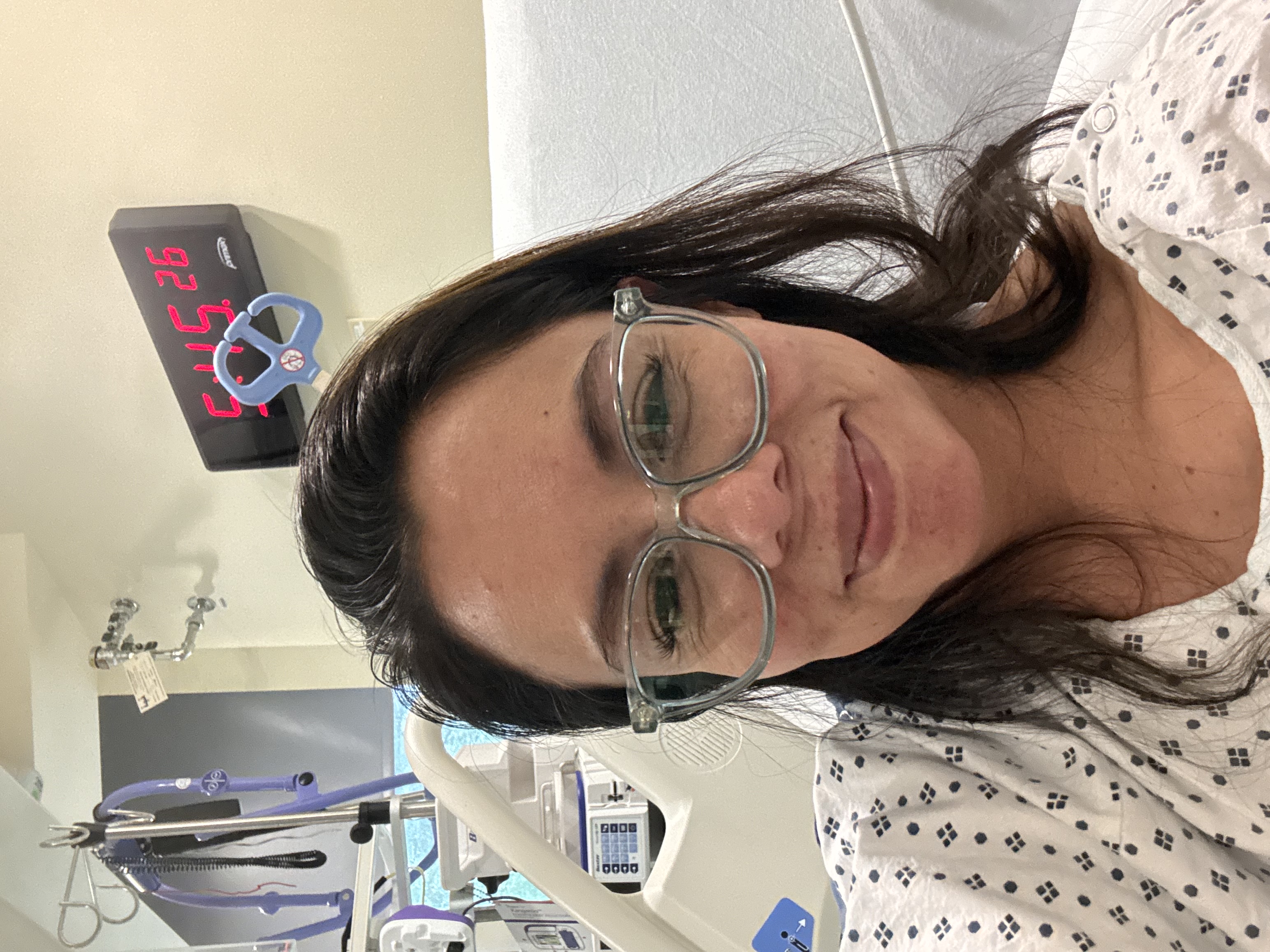
Miki was pregnant with her first child when epilepsy announced itself. She did not know she had it. One night in 2004, she had a grand mal seizure in her sleep, and her husband called 911. In the ambulance she was combative, pulling at the IV, and the paramedics kept suggesting to her husband that she must have taken something. He kept insisting she was pregnant and had done nothing wrong. Miki remembers none of it. She woke in the hospital with a blinding headache and no idea how she had gotten there.
"So it was very traumatic for us," she says. It was the beginning of a long road.
The seizures kept coming, often at night, sometimes with a warning and sometimes without. Because she was pregnant, every seizure meant another ultrasound to confirm the baby still had a heartbeat. She was seizing regularly, and each time the fear started over again.
A general neurologist referred her to an epileptologist, who walked her through her history and recognized something she had never had a name for. The strange feelings she had been having long before the grand mal seizures, the ones she had learned to live around, were seizures too. She learned she could be fully conscious during them. She thought back to a time she got lost and blacked out alone in New York City, an episode she still cannot account for, and understood it differently now.
The day she delivered her son, she had cluster seizures all day. The last thing she remembers is telling the team around nine in the morning that she felt one coming. The next thing she knew, it was five in the evening and she was pushing her baby out. Her husband had watched her seize all day. Her son was born completely healthy. He is twenty-one now.
Miki had been the main breadwinner. Her husband owned a business, and when the seizures forced her to stop working, the loss of her income made an already frightening time more stressful. She found a medication that seemed to work and went about three years without a seizure. She got her driver's license back. She went back to college to finish the teaching degree she had left behind, and she started teaching.
Then she got pregnant with her daughter, and everyone hoped the calm would hold. It did not. The seizures returned and, for the next ten years, they did not stop. Her daughter, now fourteen, was born healthy. But Miki was drug resistant. Nothing held for long, and a stay in the epilepsy monitoring unit could not pin down the cause, because she simply was not seizing enough while she was being watched.
Over time, she and her husband learned to read the pattern that no medication had cracked. Her biggest trigger was hormonal. Her seizures tracked her cycle so reliably that the two of them could anticipate the week each month when they were most likely to come, and often what that week would look like. The clinical name is catamenial epilepsy, and it is something Miki now talks about often, because so many women have never thought to look for the connection.
"There's just not enough research yet with women with epilepsy," she says, recalling a conversation with the Epilepsy Foundation at a conference. She hopes that changes.
For about three years, her epileptologist urged her to get an SEEG, a procedure that would place electrodes on her brain to map where the seizures were starting. She resisted. The idea of holes being drilled in her skull frightened her. But as she finally prepared for it and went through the round of testing again, a detailed MRI found an abnormal growth in her brain, something that had not been caught in all the scans before.
Her neurologist referred her to a neurosurgeon, and she was able to have laser ablation surgery to remove it. The surgeon warned her she would likely seize that day, because he had been operating on her brain, and she did. She had cluster seizures that day. But that was 2019, and she has not had a tonic clonic seizure since.
Miki still lives with focal seizures and expects to be on medication indefinitely. She is being monitored for what her care team believes are complex migraines, a separate neurological issue rather than a sign of her epilepsy. The hardest lingering effect is cognitive. The memory trouble and brain fog ended her teaching career for good.
She bristles gently at the idea that it is just age. It is different, she explains, describing the specific frustration of losing a word mid-sentence, of knowing exactly what she wants to say and not being able to reach it. She recalls sitting with her daughter, then in fourth grade, unable to summon a simple word she was trying to teach her. She now helps her husband run his business, a role she has grown into and genuinely loves.
Looking back, what she would tell the terrified twenty-six-year-old she once was is that life is not over, only redirected. "You might have to go a different direction, but that doesn't mean you're not gonna be happy and fulfilled," she says. She cannot teach anymore, but she loves what she does now.
She carries one tender, unresolved thread. Her son saw her have so many seizures, and that is hard for her to sit with. But he has grown into someone resilient and compassionate, and she credits the experience with shaping who he became. He is also the reason she started speaking publicly at all.
Miki had tried making videos years earlier, right after surgery, hoping to spread the word that a person can be conscious during a seizure. They went nowhere. Then, a couple of years ago, she posted a photo of herself mid-seizure at Disney World, where she looked, in her own words, like she was drunk. The response was overwhelming. Her son was in her ear the whole time telling her to keep going.
"Mom, talk about it, keep talking about it," she remembers him saying. She was scared. He told her she would get more comfortable, and she did. Now she speaks without her phone shaking in her hand, and she still lights up when he tells her one of her videos showed up on his feed.
What she found on the other side of that fear was a community. On TikTok, Instagram, and beyond, and at Epilepsy Foundation walks and events where she has met in person the people she first knew online, she discovered how many others were living the same reality quietly. After she started posting, she learned that seven people in her own life had epilepsy. None of them had known about each other. They had all just been afraid to talk about it.
Miki has three things she returns to again and again. That you can be fully conscious during a seizure. That triggers extend far beyond flashing lights, which affect only a small share of people, to things like sleep deprivation, stress, missed medication, and, for her, hormones. And that seizure first aid is simple enough for anyone to learn: get the person to a flat, soft surface, protect their head, turn them on their side to keep the airway clear, move anything dangerous away, keep them from water, and time the seizure, because more than five minutes can be an emergency.
Her advice to anyone newly diagnosed and overwhelmed is to track everything, the caffeine and the sleep and the small things that seem irrelevant, because the patterns are there even when they take years to surface. And to reach out to someone, because epilepsy is far more common than people think.
"I really, really wish that social media like this existed when I was diagnosed," she says, "because it was a very dark time." That is exactly why she keeps talking.