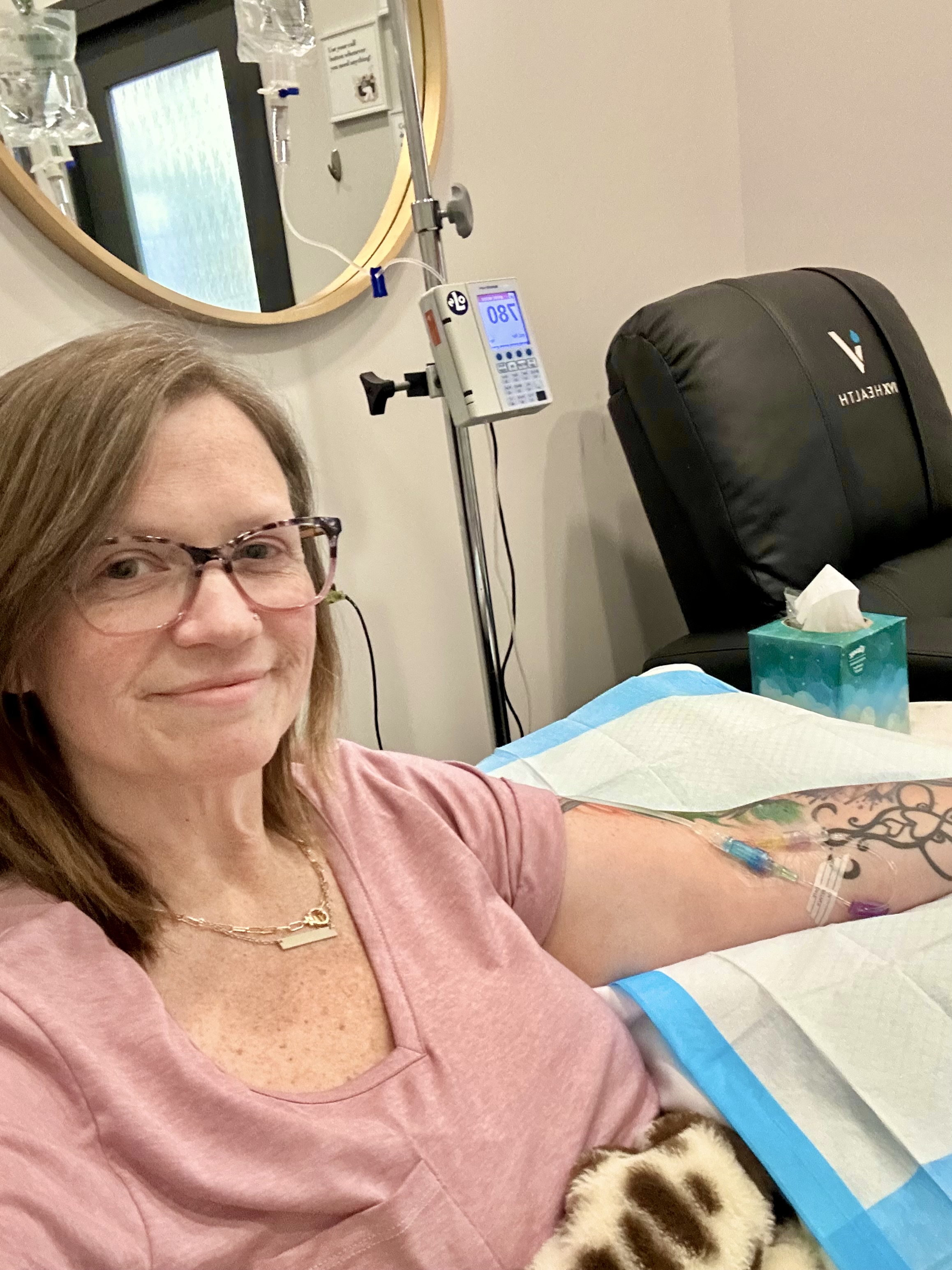
Melissa Kirkland will tell you straight up: she is the one people depend on, not the other way around. She is a born-and-raised Florida girl now living in Indiana, mother of four, keeper of three dogs (a Great Dane, a Great Pyrenees, and a fox face Pomeranian she got a few weeks ago and still does not fully know what to do with), and the person in her house who keeps everything running. Spotless house. Dinner every night. Everything in its place.
So when the tingling started in her legs last summer, her first move was not to panic. It was to call her cousin, a physical therapist back in Florida, and ask about stretches. Something must be pinched. Nothing a little movement could not fix.
Within months, that small tingling would change everything.
By October, the tingling had spread from her hamstrings down through her calves and into her feet. Then came jolts of nerve pain that felt like electricity running through her legs. She was embarrassed to go to the doctor over something so vague, but she finally made an appointment with her primary care. Her hands and arms were starting to feel the same way her legs had.
Her doctor suspected MS. She got on the neurology cancellation list expecting to wait months. The office called the next day. Could she come in tomorrow? She said yes.
EMGs showed nerve damage in both her upper and lower extremities. Brain and lumbar MRIs cleared her for MS and spinal stenosis. A lumbar puncture confirmed what her neurologist suspected. In January 2026, Melissa was diagnosed with Chronic Inflammatory Demyelinating Polyneuropathy, CIDP, a rare autoimmune condition in which the immune system attacks the protective covering of peripheral nerve fibers.
"I feel very blessed that things moved as quickly as they did," she says. "A lot of people wait months just to get in to see a neurologist."
By December, Melissa was using a walker and a cane. Her knees would not fully straighten. She had not been able to squat since October. Three fingers on each hand burn constantly, so she has learned to do most things with her ring finger and pinky. Buttons are out. She is in joggers with elastic waistbands now. "Fat pants every day," she says, and laughs. She has not been to the second floor of her own home since November.
At restaurants, she asks for plastic cups because she drops things and does not want to break a glass. Her job in revenue cycle requires a lot of typing, and she is mostly pecking with two fingers now. Eventually she had to tell her supervisor what was happening, and broke down crying for the first time.
"I told her: I can't be the employee I was five or six weeks ago. I don't want to bring the team down," Melissa says. Her supervisor's response was simple. We're here for you. Keep me in the loop.
Melissa manages nerve pain with Cymbalta during the day and gabapentin at night, when the pain tends to be worst. Her primary treatment is IVIG infusions on a recurring schedule. The drives home are rough, headaches can last close to a week, and she schedules infusions on Thursdays and Fridays so the hardest days fall on the weekend. But the treatment is working. Since starting IVIG, she walks more upright. She recently started physical and occupational therapy and was fitted for ankle-foot orthoses to help with foot drop.
Asking for help does not come naturally to Melissa. When her mom came up from Florida at the end of December and stayed for weeks, it made a real difference. But eventually Melissa told her it was time to go home.
"This is our life now," she told her. "We've got to learn to live with it."
She found community in online CIDP groups, where other patients' stories answered questions her doctors did not always have time to address. On her worst days, her Great Pyrenees climbs up beside her and does not move until she feels better. And the new Pomeranian, tiny and ridiculous and nothing like the big dogs she has always had, has turned out to be exactly what she needed.
"I love him to death," she says. "I just don't know what to do with him."
Melissa is only a few months out from her own diagnosis. She does not have years of perspective to offer. What she has is honesty.
"It's going to get worse before it gets better. Just hang in there."
She is sharing her story because there is not much out there about CIDP, and she remembers how alone the unknown felt. If it reaches someone sitting with an unexplained tingling or an electric nerve pain they are too embarrassed to bring to a doctor, she hopes it tells them: go. Do not wait.
Today was a rough one. She fell three times before the call even started. She got fitted for AFOs, sat through physical therapy, and drove herself home. Tomorrow should be better.